
History & Civics
Look at the newspaper excerpt given on the right and answer the questions that follow:
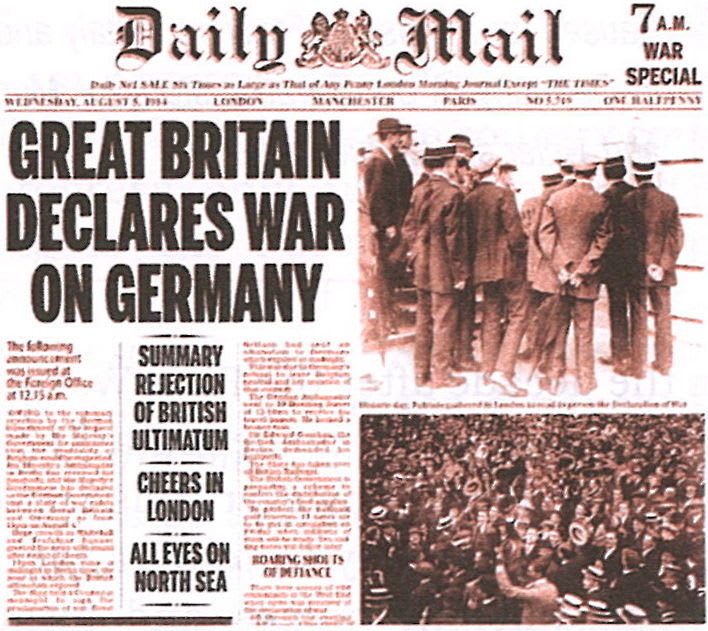
(a) Who summarily rejected British ultimatum? Why?
(b) Why did Great Britain declare war on Germany?
(c) What was the final outcome of the war that began after Great Britain declared war on Germany? How did it affect both the countries?
1ˢᵗ World War
31 Likes
Answer
(a) Germany summarily rejected the British ultimatum, which had demanded that Germany withdraw its forces from Belgium.
This is because Germany had invaded Belgium as part of its military strategy to attack France.
(b) Great Britain declared war on Germany because Germany violated Belgium's neutrality, which Britain had pledged to protect through a treaty. This invasion was viewed by the British as an unprovoked act of aggression. When Germany ignored Britain's ultimatum to withdraw its forces from Belgium, Britain responded by declaring war on Germany. Additionally, Britain was increasingly concerned about Germany’s growing military and naval power, which threatened the balance of power in Europe.
(c) The First World War ended on November 11, 1918, when Germany agreed to an armistice. The Allied Powers— which included Great Britain, France, and later the United States—won the war. The Central Powers, led by Germany, were defeated.
Effects on Germany —
- Germany was held responsible for the war and made to pay $33 billion in reparations and sign the Treaty of Versailles.
- Germany lost Alsace-Lorraine to France and other territories to Belgium, Poland, Denmark, etc.
- Saar coal mines were given to France for 15 years and Rhineland demilitarised.
- It lost all overseas colonies to the Allies.
- Japan took over German territories in China and the Pacific.
- German Army and navy size were severely restricted. Air force and submarines were banned.
Effects on Great Britain —
- Britain suffered heavy loss of life and resources despite being on the winning side.
- The war weakened Britain economically, and it lost its status as the foremost economic power.
- Rise of the USA and Japan challenged British dominance.
- British control over colonies declined, leading to nationalist movements especially in India.
Answered By
20 Likes
Related Questions
With reference to the First World War, answer the following questions:
(a) State any three consequences of the war.
(b) Mention three points under the Treaty of Versailles, which affected Germany.
(c) What were the objectives of the League of Nations? Name the organisation formed in October 1945 with objectives similar to those of the League of Nations.
Look at the newspaper clipping given on the next page and answer the questions that follow:

(a) What was the immediate impact of the incident mentioned in newspaper clipping? Who organised the assassination? What was the objectives behind the assassination?
(b) Besides the incident mentioned in the newspaper, state three other reasons that led to a turning point in the history of the world.
(c) Name the treaty that was designed to prevent Germany from going to war again. State any three clauses of this treaty.
More than national pride, it was the greed to acquire colonies and thereby, more money and resources that led to the First World War. Explain.
Do you think the First World War could be avoided? Give reasons to support your answer.