
History & Civics
More than national pride, it was the greed to acquire colonies and thereby, more money and resources that led to the First World War. Explain.
1ˢᵗ World War
31 Likes
Answer
By the end of the 19th century, England and France had built up a huge colonial empire in Asia and Africa. Some other countries of the world like Germany, Italy, Russia and Japan also wanted to increase their sphere of influence and create their colonies in Asia and Africa. These colonies were essential for their progress as they could provide raw materials for their industries and markets for their finished products. Besides, acquiring colonies would add to the power and prestige of these countries. This led to a clash of interest among these countries. They began to scramble for colonies which resulted in rivalries and wars. Thus, we can say that the greed to acquire colonies and thereby, more money and resources led to the First World War more than the national pride.
Answered By
20 Likes
Related Questions
With reference to the First World War, answer the following questions:
(a) State any three consequences of the war.
(b) Mention three points under the Treaty of Versailles, which affected Germany.
(c) What were the objectives of the League of Nations? Name the organisation formed in October 1945 with objectives similar to those of the League of Nations.
Look at the newspaper clipping given on the next page and answer the questions that follow:

(a) What was the immediate impact of the incident mentioned in newspaper clipping? Who organised the assassination? What was the objectives behind the assassination?
(b) Besides the incident mentioned in the newspaper, state three other reasons that led to a turning point in the history of the world.
(c) Name the treaty that was designed to prevent Germany from going to war again. State any three clauses of this treaty.
Look at the newspaper excerpt given on the right and answer the questions that follow:
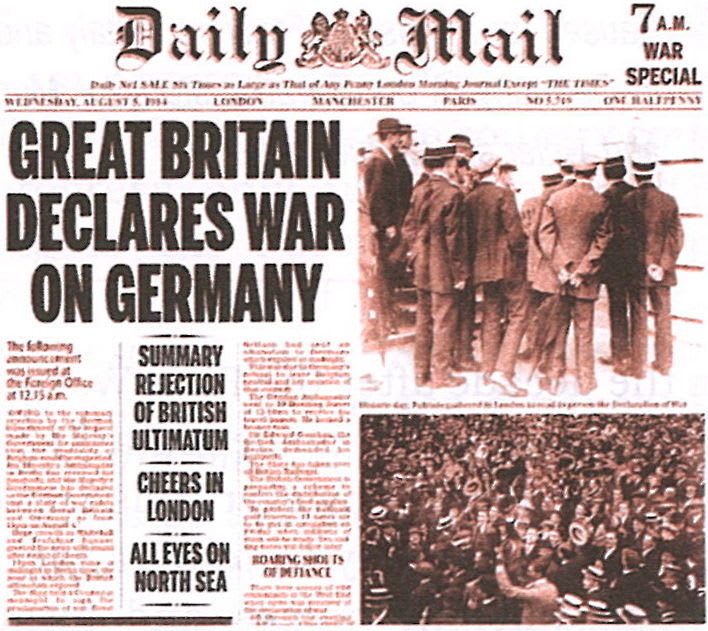
(a) Who summarily rejected British ultimatum? Why?
(b) Why did Great Britain declare war on Germany?
(c) What was the final outcome of the war that began after Great Britain declared war on Germany? How did it affect both the countries?
Do you think the First World War could be avoided? Give reasons to support your answer.