
Mathematics
Statement 1: Area of given triangle ABC = 6 x 5 cm2.
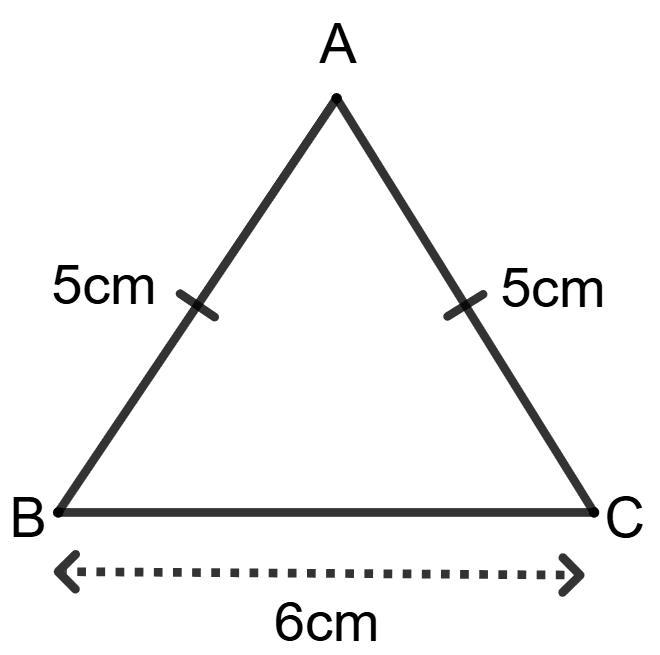
Statement 2: Area of given triangle ABC = x 6 x 4 cm2.
Both the statements are true.
Both the statements are false.
Statement 1 is true, and statement 2 is false.
Statement 1 is false, and statement 2 is true.
Pythagoras Theorem
4 Likes
Answer
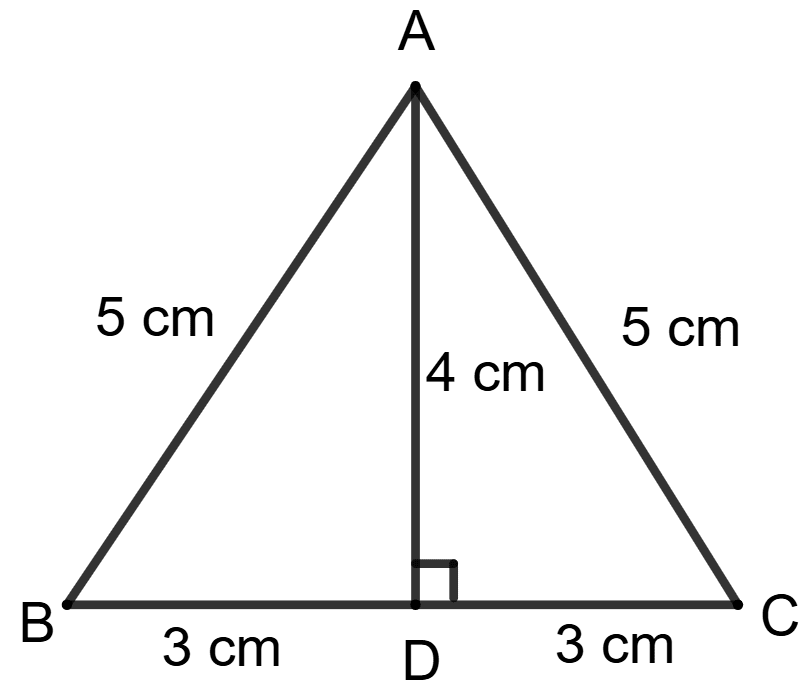
Draw a perpendicular bisector, AD.
The perpendicular bisector of the base also passes through the midpoint of the base, effectively dividing it into two equal segments.
BD = DC = = 3 cm
According to Pythagoras theorem, in a right-angled triangle, the square of the length of the hypotenuse is equal to the sum of the squares of the lengths of the other two sides.
⇒ Hypotenuse2 = Base2 + Height2
In Δ ABD,
⇒ AB2 = AD2 + BD2
⇒ 52 = AD2 + 32
⇒ 25 = AD2 + 9
⇒ AD2 = 25 - 9
⇒ AD2 = 16
⇒ AD =
⇒ AD = 4 cm.
Using formula, area of triangle = x base x height
Here, base, BC = 6 cm and height, AD = 4 cm
⇒ Area of triangle = x 6 x 4 cm2
∴ Statement 1 is false, and statement 2 is true.
Hence, option 4 is the correct option.
Answered By
2 Likes
Related Questions
The sides of a rectangle are 12 cm and 16 cm. The length of its diagonal is:
28 cm
4 cm
cm
cm
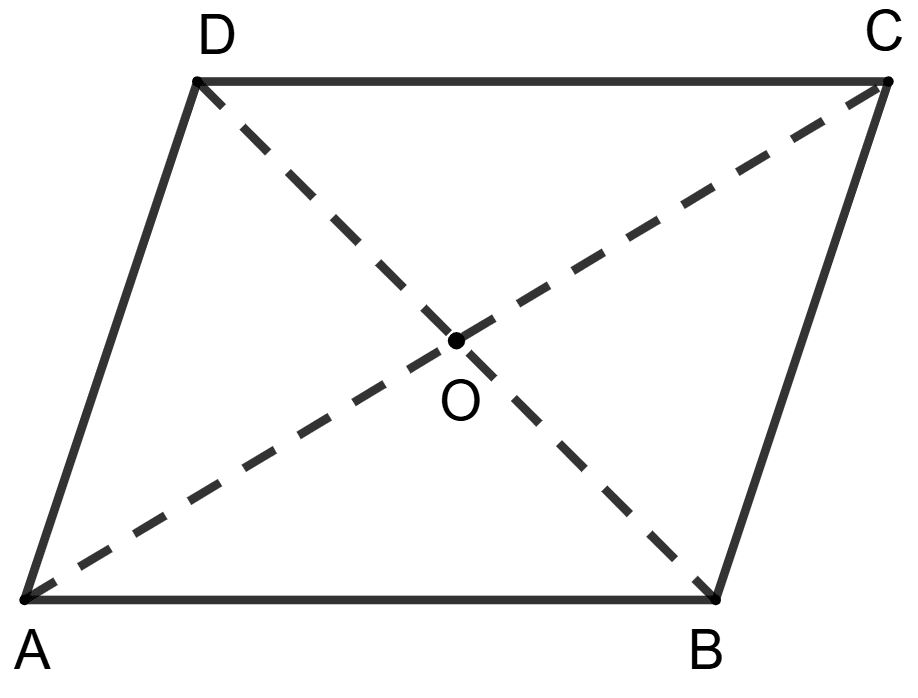
Statement 1: ABCD is a rhombus, its diagonal AC = 16 cm and diagonal BD = 12 cm, perimeter of rhombus = 64 cm.
Statement 2: OA = 8 cm, OB = 6 cm. Then, AB = 10 cm
And, perimeter of rhombus = 40 cm
Both the statements are true.
Both the statements are false.
Statement 1 is true, and statement 2 is false.
Statement 1 is false, and statement 2 is true.
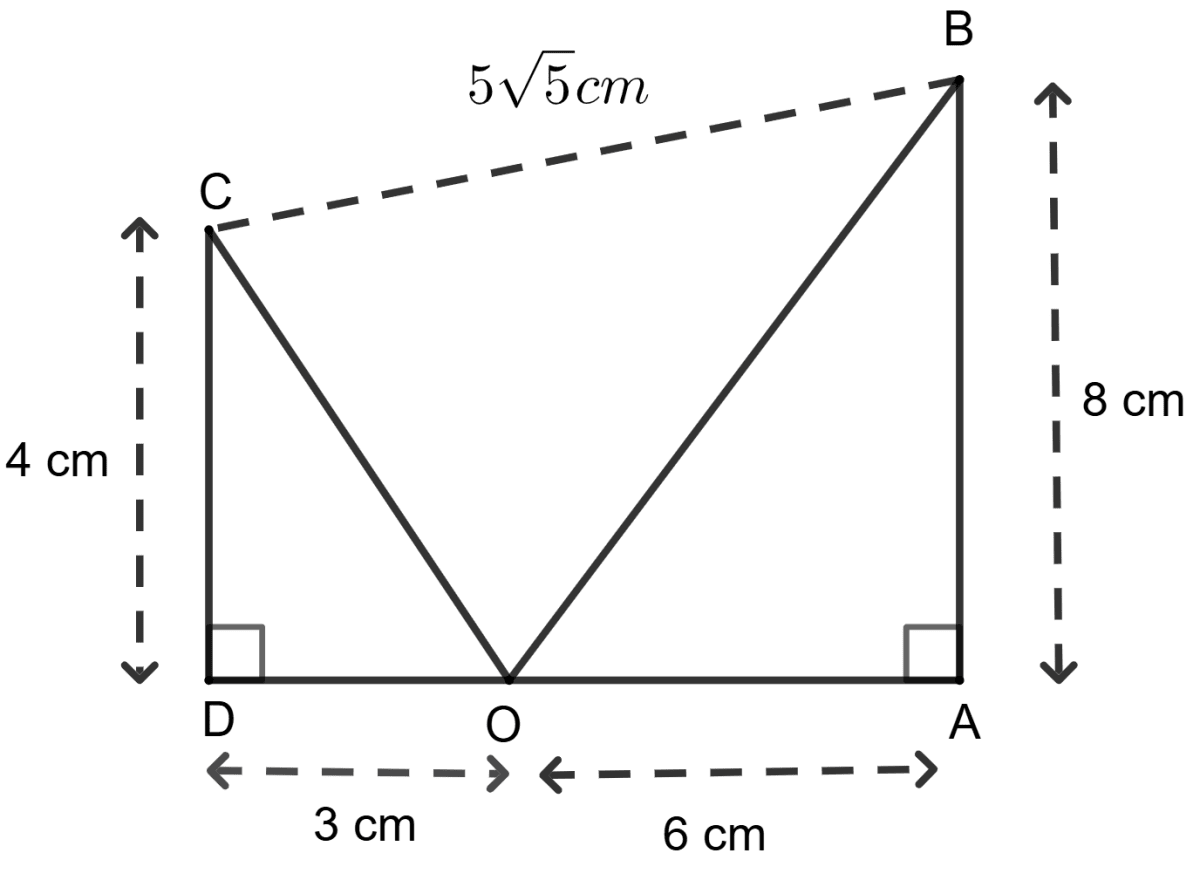
Assertion (A): Angle BOC = 90°.
Reason (R): OC2 = 32 + 42 = 25
OB2 = 62 + 82 = 100
OC2 + OB2 = 125 = BC2
A is true, but R is false.
A is false, but R is true.
Both A and R are true, and R is the correct reason for A.
Both A and R are true, and R is the incorrect reason for A.
Assertion (A): x =
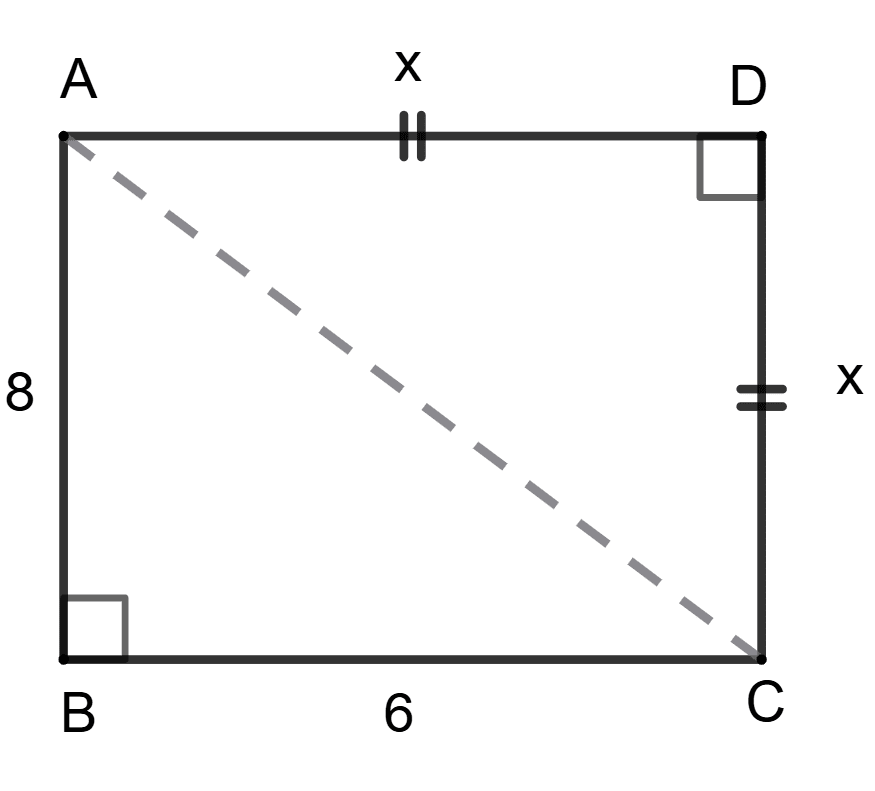
Reason (R): AC2 = 82 + 62 = x2 + x2
A is true, but R is false.
A is false, but R is true.
Both A and R are true, and R is the correct reason for A.
Both A and R are true, and R is the incorrect reason for A.