
Geography
Given below is a photograph of Purwa Waterfall on the River Tamsa in Madhya Pradesh. Answer the following questions:
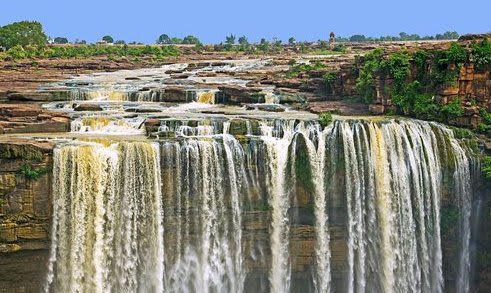
(a) What stage is the River Tamsa to cause formation of this waterfall? Give reasons to support your answer.
(b) What other landforms would a river make in this stage?
(c) What landforms would the River Tamsa make in the next stage of its flow?
(d) Besides being a tourist attraction waterfalls are important sources of energy. Elucidate.
Denundation
28 Likes
Answer
The River Tamsa in Madhya Pradesh is in its youthful stage (also called the upper course). This is due to following reasons:
Presence of Waterfalls (like Purva Falls): Waterfalls are classic features of a youthful river stage, where the river flows over a steep slope or escarpment. The Purva Falls are formed as the River Tamsa descends over the Rewa Plateau, which is an elevated region.
Steep Gradient: In the upper course, rivers have a high gradient, causing rapid flow and vertical erosion, which leads to the formation of waterfalls and gorges.
Vertical Erosion Dominates: The river cuts downwards more than sideways, creating sharp features like rapids and waterfalls.
Therefore, the formation of Purva Falls by Tamsa river is a characteristic of its youthful stage, marked by steep gradients, vertical erosion, and the presence of waterfalls.
(b) Other landforms (apart from Waterfalls) formed during the youthful stage are —
- Rapids
- V-shaped valleys and I-shaped valleys
- Gorges
- Canyons
(c) River Tamsa would form the following landforms in the next stage, i.e., mature stage (or middle course) —
- Meanders
- Oxbow lakes
- Floodplains
- Wider V-shaped valleys
(d) Waterfalls are important sources of energy because the falling water possesses great potential and kinetic energy, which can be harnessed to generate hydroelectric power (HEP). When water falls from a height, it drives turbines connected to generators, producing clean and renewable electricity. This makes waterfalls valuable for sustainable energy production, especially in hilly and mountainous regions.
Answered By
17 Likes
Related Questions
Give a geographical reason for each of the following:
(i) The effects of wind erosion are more pronounced in desert areas.
(ii) Migratory sand dunes are uncertain and dangerous.
(iii) Long rooted trees and sand holding grasses are grown bordering fields near deserts.
State the factors on which the shape and size of dunes depend?
What is the relationship between denudation, weathering and erosion? Give examples to support your answer.
While travelling from Haridwar to Prayagraj, the course of which river did you follow? List the landforms associated with it along the course you followed.