History & Civics
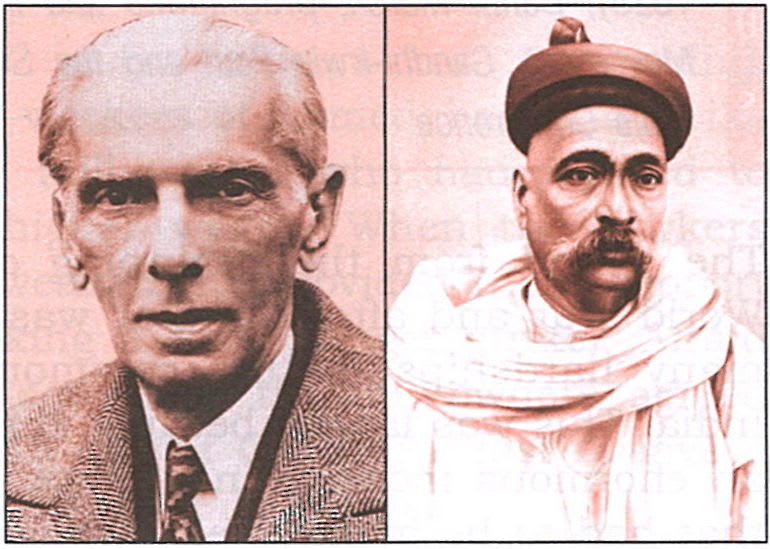
Identify the person in the picture and answer the following questions:

(a) What were his views regarding Hindu-Muslim unity?
(b) What role did he play in the formation of the Muslim League?
(c) State the impact of the Muslim League on the National Movement.
Muslim League
73 Likes
Answer
The person shown in the picture is Sir Sayyid Ahmad Khan.
(a) His views regarding Hindu-Muslim unity were as follows:
- He regarded Hindus and Muslims to be one Quam (nation).
- He founded the Mohammedan Anglo-Oriental College at Aligarh which had both Hindu and Muslim patrons.
- However, under the influence of the British Principal of Mohammedan Anglo-Oriental College, in the 1880s, he gave up his earlier views and declared that the political interests of Hindus and Muslims were different.
- When the Indian National Congress was founded, Sir Sayyid Ahmad Khan opposed it.
- He founded the United Indian Patriotic Association in 1888 mainly with a view to oppose the Congress.
- In this effort, he was supported by Mr. Beck, the British Principal of Mohammedan Anglo-Oriental (MAO) College (Aligarh). Beck's idea was that Anglo-Muslim unity was possible, but Hindu-Muslim unity was impossible.
- It was said that Sir Sayyid Ahmad Khan believed that since the Hindus formed the majority of the Indian population, they would dominate the Muslims in case of a withdrawal of the British rule.
- He felt that the continuance of British rule was a "guarantee for the welfare and progress of the community."
- Therefore, he declared that if the educated Muslims support the British, the latter would reward them with government jobs and other special favours.
(b) Sir Sayyid Ahmad Khan founded the Mohammedan Anglo-Oriental College at Aligarh which had both Hindu and Muslim patrons.
- Sir Sayyid Ahmad believed that since the Hindus formed the majority of the Indian population, they would dominate the Muslims in case of a withdrawal of the British rule.
- He felt if he supported British, they would secure their rights and be rewarded with government jobs and other special favors.
- Theodore Beck was invited by Sir Sayyidd Ahmed Khan to serve as the Principal of the Mohammedan Anglo-Oriental College in Aligarh.
- He identified with the Indian Muslims and made a systematic effort to alienate them from the Hindus.
- His objective was to protect the political rights of the Muslims and to strengthen the British rule in India.
- His idea was that Anglo Muslim unity was possible, but Hindu-Muslim unity was impossible.
- This paved the way for the formation of the Muslim League.
(c) The impact of the Muslim League on the National Movement is as follows:
League's Role in the Beginning —
- Initially Muslim League sought greater representation of Muslims in all services.
- As regards representation in Assemblies, it wanted more seats than its numerical representation warranted.
- Its political activities were directed not so much against the foreign rulers as against the Congress.
- Its leaders, belonging to the upper class, had little in common with the Muslim masses and they did not fight for the removal of their grievances.
Government Support to the League —
- The Morley-Minto Reforms of 1909 provided separate electorates for Muslim whereby seats were reserved for the Muslims from where Muslims could vote for the Muslim candidates.
- The provision for separate electorate in the Morley-Minto Reforms was intentionally incorporated to please the Muslim League and create a rift between the Muslim League and the Congress.
The Phase of Rapprochement — From 1910 to 1913, new forces emerged in Muslim League politics and some of its leaders realised that rapprochement with the Congress was desirable. Several factors were responsible for this change in attitude:
- Britain's hostility to Turkey in the Turko-Italian War (1911-12) and the Balkan Wars (1912-13) and the annulment of the Partition of Bengal in 1911 made a large section of Muslim leaders critical of British policies
- The younger section of emerging Muslim leaders disliked the loyalist politics of the Aligarh group and the leadership of big Nawabs and Zamindars. Some young scholars, influenced by the Deoband school of Muslim studies were inspired by nationalist sentiments.
Congress and the League —
- When the British Government acted against the Turkish interests and supported the cause of the Balkan countries, the Indian Muslims stood up and launched the Khilafat Movement against the British.
- The Congress cooperated with them and the Khilafat issue was included as one of the demands of the Non-cooperation Movement.
- As a result, a pact which is known as the Lucknow Pact was signed. The Lucknow Pact refers to the joint scheme of political reforms agreed to by both the Congress and the Muslim League in 1916 regarding the structure of government in India and the relationship between the Hindus and the Muslims.
Partition of the Country on Communal Lines —
- In 1930 the idea of two nation states was born and in the 1940 session of the League at Lahore, Jinnah put forward his two-nation theory.
- Thus, despite a severe opposition from Gandhiji, the country drifted towards the partition.
- The communal riots broke out in the country and in 1947, a separate country, Pakistan, came into existence.
Answered By
38 Likes
Related Questions
What is meant by Separate (Communal) Electorates?
What was the Lucknow Pact?
The growth of communalism in India was encouraged by the British authorities as well as certain trends in Indian society. In the light of this observation, explain:
(a) The Divide and Rule Policy of the British.
(b) The writings and speeches of the Assertive Nationalists.
(c) The erroneous interpretation of Indian History.
(a) Identify the persons in the given picture. Which agreement for a joint scheme of political reforms was signed by these two persons? The agreement was signed post which international event?
(b) Mention any three factors that led to the signing of this agreement.
(c) State any two significant outcomes of this agreement.