Mathematics
In the adjoining figure, BD= AD = AC. If ∠ABD = 36°, find the value of x.

Triangles
55 Likes
Answer
From figure,
∠ABD = ∠BAD = 36° (As angles opposite to equal sides are equal.)
∠BDA = 180° - (36° + 36°) = 180° - 72° = 108°.
From figure,
∠BDA + ∠ADC = 180°
108° + ∠ADC = 180°
∠ADC = 72°.
In △ADC,
As AD = AC,
∴ ∠ADC = ∠ACD = 72° (As angles opposite to equal sides are equal.)
∠ADC + ∠ACD + ∠DAC = 180°
72° + 72° + ∠DAC = 180°
∠DAC = 180° - 144° = 36°.
From figure,
∠BAD + ∠DAC + x = 180°
36° + 36° + x = 180°
72° + x = 180°
x = 108°.
Hence, x = 108°.
Answered By
30 Likes
Related Questions
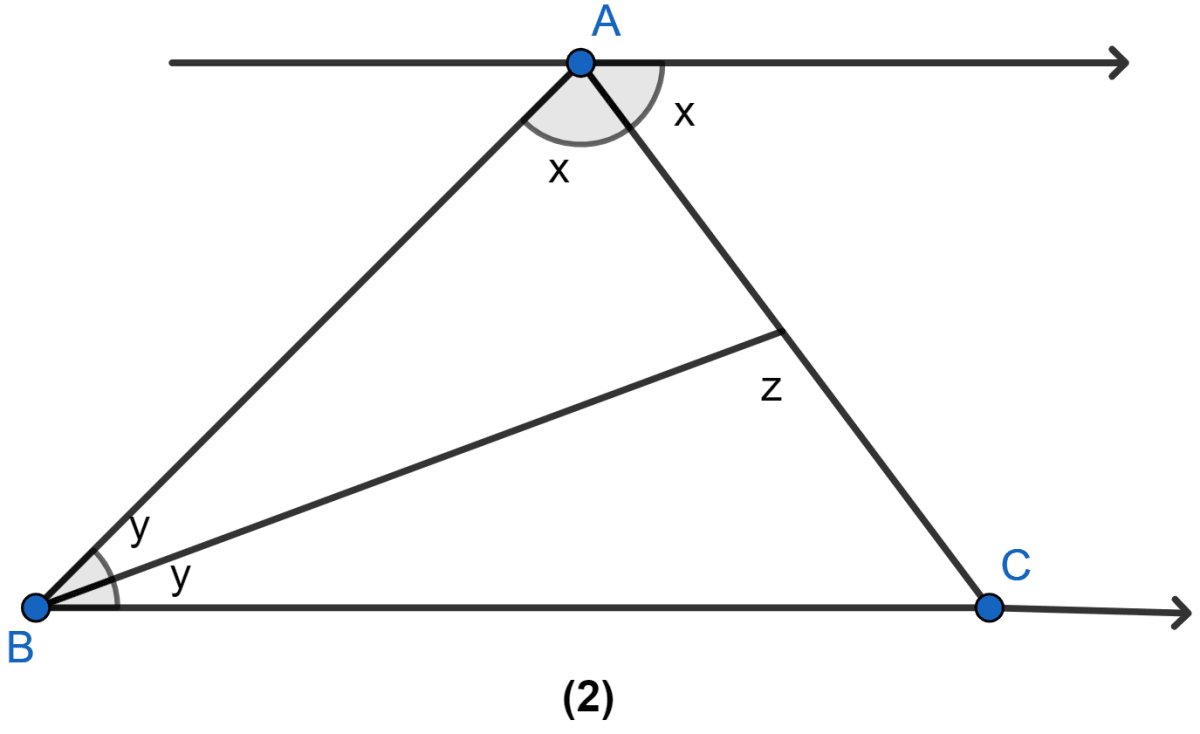
In the figure (2) given below, prove that
(i) x + y = 90°
(ii) z = 90°
(iii) AB = BC.
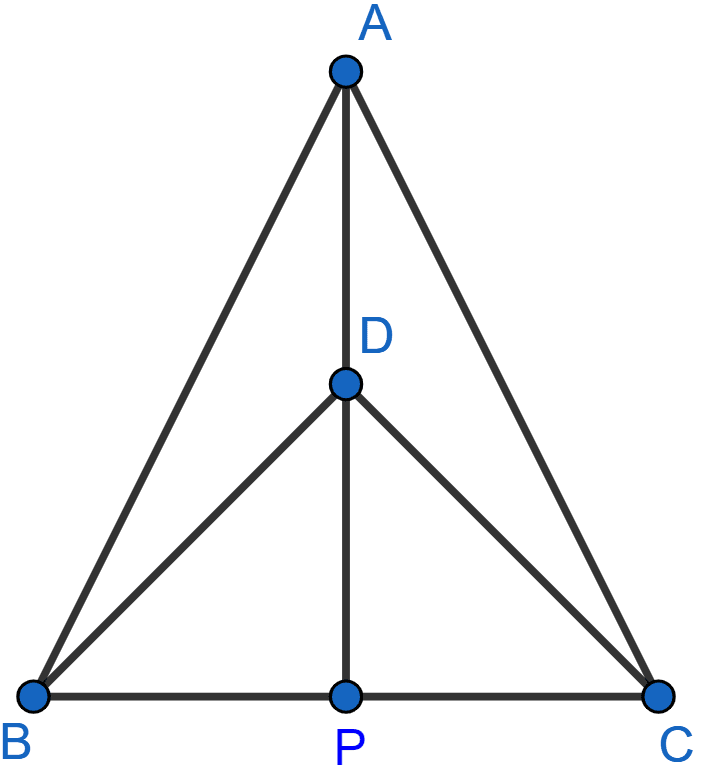
In the adjoining figure, ABC and DBC are two isosceles triangles on the same base BC and vertices A and D are on the same side of BC. If AD is extended to intersect BC at P, show that
(i) △ABD ≅ △ACD
(ii) △ABP ≅ △ACP
(iii) AP bisects ∠A as well as ∠D
(iv) AP is the perpendicular bisector of BC.
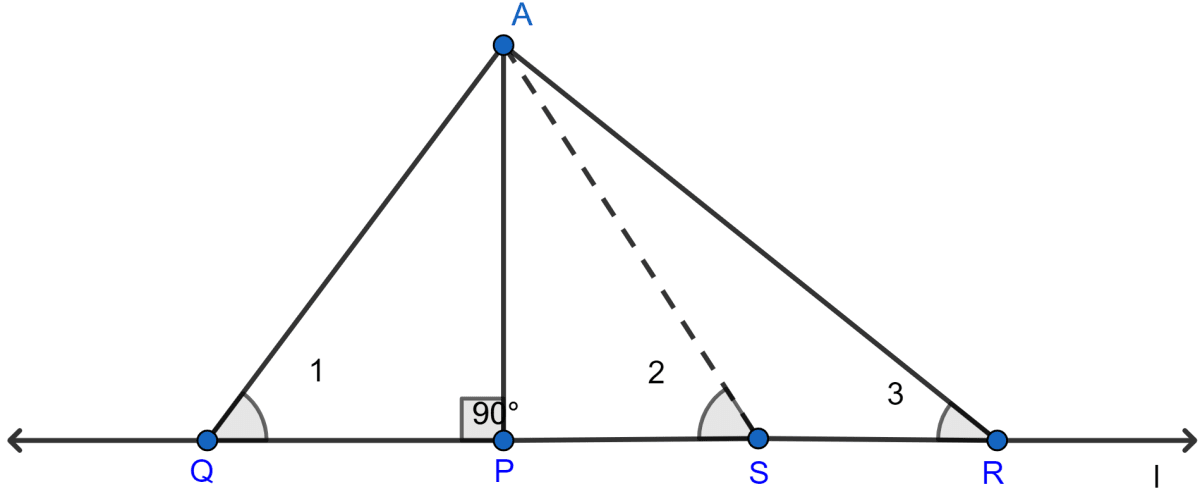
In the adjoining figure, AP ⊥ l and PR > PQ. Show that AR > AQ.
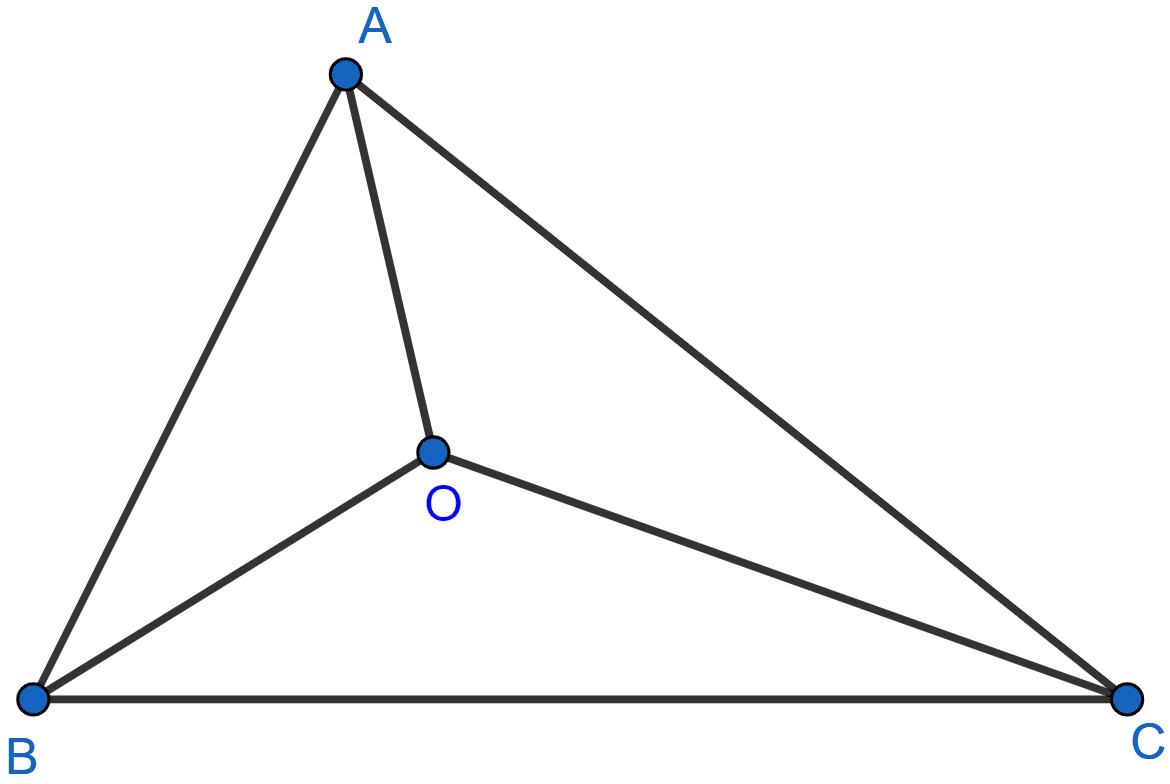
If O is any point in the interior of a triangle ABC, show that OA + OB + OC > (AB + BC + CA).