
Biology
Rima is playing music.

(a) Trace the path of sound of music using following terms:
Pinna, Ossicles, Hammer, Oval window, Cochlea, Eardrum,
(b) Name the nerve that carries the impulse of sound to brain.
Sense Organs
3 Likes
Answer
a → Pinna → Eardrum → Hammer → Ossicles → Oval window → Cochlea, b → Auditory nerve
Reason — Sound waves enter the ear through the pinna (the visible part of the ear) and travel through the ear canal (auditory canal). It strikes the eardrum, causing it to vibrate. These vibrations are transmitted to three tiny bones in the middle ear called the ossicles (malleus, incus, and stapes), which amplify the sound. Vibrations pass through the oval window into the fluid-filled cochlea in the inner ear. The movement of fluid in the cochlea stimulates tiny hair cells, which convert the vibrations into electrical signals. These electrical signals are transmitted via the auditory nerve to the brain, where they are interpreted as sound.
Answered By
2 Likes
Related Questions
Rahul inserted a hairpin into his right ear to remove ear wax. He felt a sudden sharp pain with loss of hearing. This was due to:
- Rupture of eardrum
- Rupture of vestibule
- Rupture of cornea
- Rupture of pinna
Adjusting the focal length of the eye lens to view objects at different distances is done by:
- Cornea
- Iris
- Ciliary muscles
- Sclera
Kathak is an Indian classical dance which involves a lot of spinning by the dancers. The learners of this dance experience dizziness in the beginning while spinning.
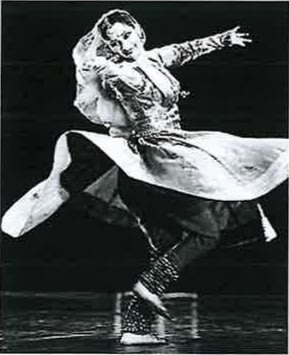
(a) Name the part of the membranous labyrinth responsible for this dizziness.
(b) Give a suitable reason for your answer.
(c) Mention the nerve that carries the impulse for dizziness to the brain.
Farhan’s classroom is very close to the compound wall of his school. He was observing two pigeons sitting on the wall. He could see one bird clearly, but the image of the second bird was blurred as the pigeon was a little away from the first.

(a) Name the defect of the eye Farhan is suffering from.
(b) Where is the image of the second pigeon formed in his eyeballs?
(c) What lens can be used to correct the defect?