Biology
Rima is playing music.

(a) Trace the path of sound of music using following terms:
Pinna, Ossicles, Hammer, Oval window, Cochlea, Eardrum,
(b) Name the nerve that carries the impulse of sound to brain.
Sense Organs
2 Likes
Answer
a → Pinna → Eardrum → Hammer → Ossicles → Oval window → Cochlea, b → Auditory nerve
Reason — Sound waves enter the ear through the pinna (the visible part of the ear) and travel through the ear canal (auditory canal). It strikes the eardrum, causing it to vibrate. These vibrations are transmitted to three tiny bones in the middle ear called the ossicles (malleus, incus, and stapes), which amplify the sound. Vibrations pass through the oval window into the fluid-filled cochlea in the inner ear. The movement of fluid in the cochlea stimulates tiny hair cells, which convert the vibrations into electrical signals. These electrical signals are transmitted via the auditory nerve to the brain, where they are interpreted as sound.
Answered By
1 Like
Related Questions
Keshav enters a dark room from a brightly lit area. He experiences difficulty in viewing objects, but gradually his vision improves.

Explain the role of the photoreceptors in this case.
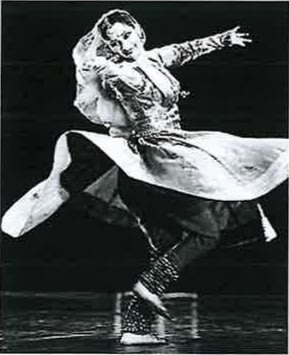
Kathak is an Indian classical dance which involves a lot of spinning by the dancers. The learners of this dance experience dizziness in the beginning while spinning.
(a) Name the part of the membranous labyrinth responsible for this dizziness.
(b) Give a suitable reason for your answer.
(c) Mention the nerve that carries the impulse for dizziness to the brain.
Which parts of the ear are responsible for:
(a) Static equilibrium?
(b) Dynamic equilibrium?
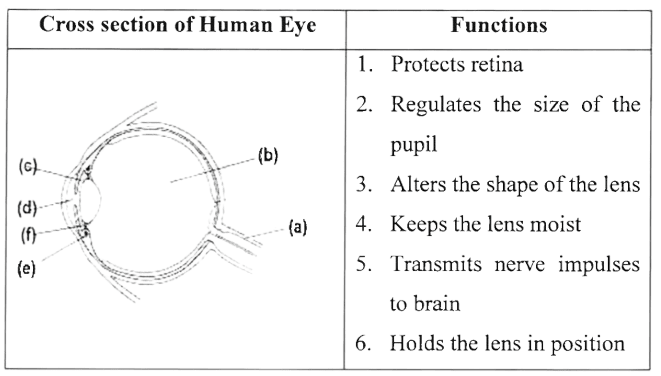
Given below is a cross section of the human eye. Match the structures marked (a) to (e) with their correct functions:
Example: (f) - 6. Holds the lens in position