
History & Civics
Why was the Simon Commission appointed by the British Government? Why did the Congress boycott the Commission?
Mahatma Gandhi
8 Likes
Answer
In November 1927, the British Government appointed the Indian Statutory Commission, popularly known as the Simon Commission, to investigate the need for further constitutional reforms. The Commission was composed of seven British members of Parliament.
The commission had no Indian member. This was seen as a violation of the principle of self-determination and a deliberate insult to the self-respect of the Indians. Hence, at its Madras session in 1927, presided over by Dr. Ansari, the National Congress decided to boycott the commission 'at every stage and in every form'.
Answered By
1 Like
Related Questions
The Jallianwala Bagh Massacre which shook the British rule in India was reported in the British Press after eight months when the Hunter Committee of Inquiry formed to inquire into the matter gave its report. The Indian Press also took little note of the incident and buried it in the inside pages of the newspaper. Why, do you think, that such a gruesome massacre remained the most underplayed news stories of its time?
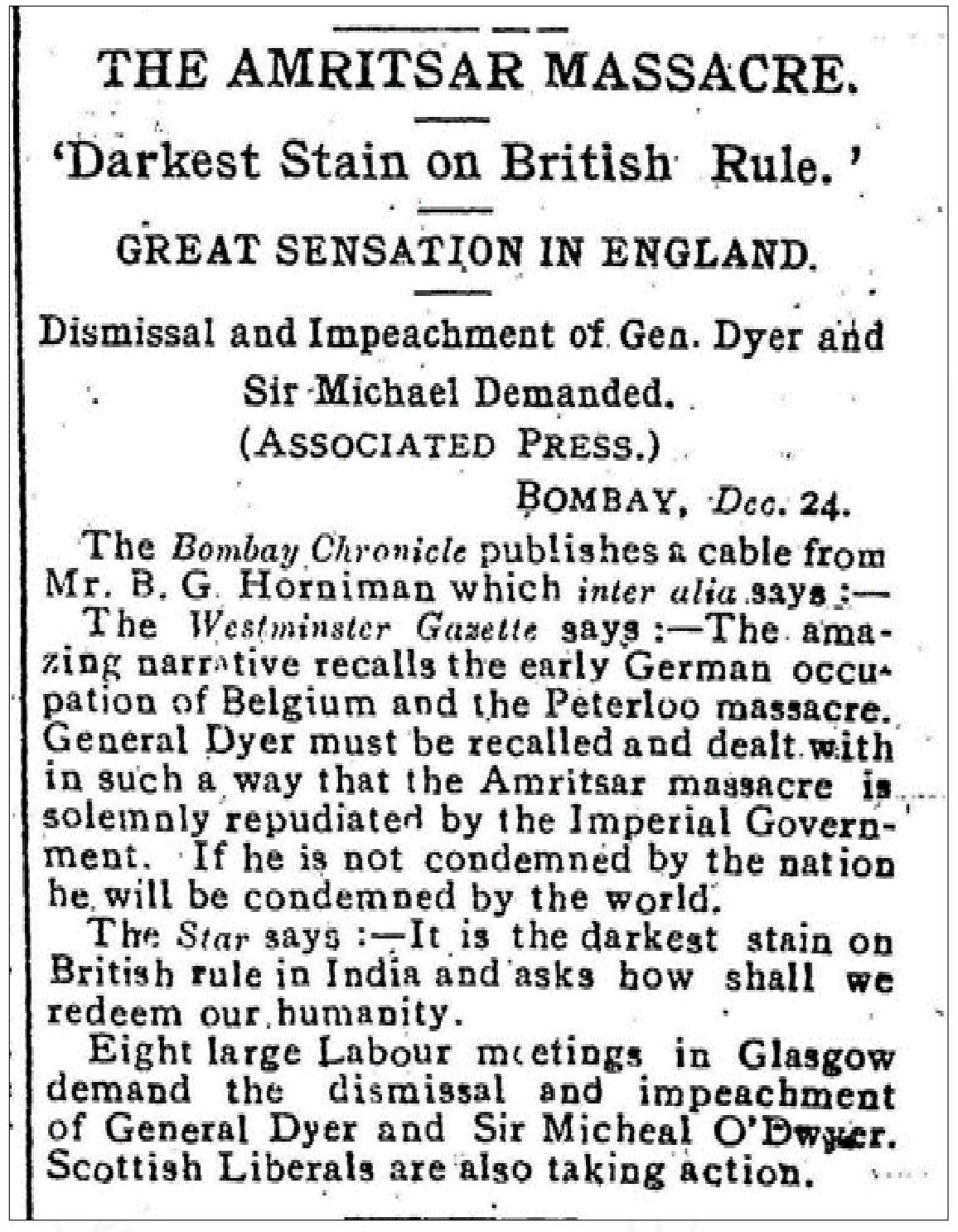
Name the incident related to the above newspaper article and examine the cause and effect of the incident.
Read the excerpt given below and answer the question that follows:
A commission, without any Indian members, was sent to India to discuss constitutional reforms. The step agitated the people, and the Indian political parties boycotted the commission. When the Commission visited Lahore on October 30, 1928, Rai led the non-violent march to protest the commission.
(Source: Modern History, NCERT)
Name the movement that ensued with the commission coming to India. State any two significant impacts of the movement.
The Manchester Guardian was the first to publish a report on the massacre, eight months later on December 13, 1919. The headline of this report read: "An Astonishing Story From India."
Which massacre is being talked about in the above newspaper report? When and where did this massacre take place?