
History & Civics
Growth of communalism in India was encouraged by the British authorities as well as certain trends in Indian society. In the light of this observation, explain :
(a) The 'Divide and Rule' policy of the British.
(b) The writings and speeches of the assertive nationalists.
Muslim League
3 Likes
Answer
(a) After the uprising of 1857, the British started following the policy of 'Divide and Rule' to create communal tensions between the Hindu-Muslim communities.
- The English presented the Muslim rulers as plunderers and tyrannical bigots to create hatred for them among the Hindus. Similarly, they painted several Hindu rulers as cruel to their Muslim subjects.
- In 1905, they tried to justify the partition of Bengal by telling the Muslims that Bengal was being partitioned to create a new Muslim majority province where the Hindus would not be able to subvert their interests.
- The foundation of the Muslim League in 1906 was an attempt to drive a wedge between the two communities. As a result, the Muslims began to support the partition of Bengal and called the Swadeshi Movement a mere hoax.
- The Morley-Minto Reforms of 1909 introduced the principle of communal representation in the legislatures.
(b) The Assertive Nationalists or Radical Nationalists used fiery speeches and writings to awaken national pride and promote mass participation in the freedom struggle. However, some of their statements were interpreted by conservative sections and religious minorities, especially Muslims, as being Hindu-centric.
- Tilak organised Shivaji and Ganapati festivals.
- Aurobindo Ghosh considered India as mother and nationalism as religion.
There was a certain tinge of religion in the political work and ideas of the radical nationalists. As a result, these speeches and writings, though intended to inspire patriotism, gave rise to communal fears among sections of Indian society.
Answered By
2 Likes
Related Questions
The foundation of the Muslim League in 1906 had great repercussions on the later history of India. In this context, answer the following :
(a) Main objectives of the Muslim League.
(b) Main impact of the Muslim League on the National Movement.
What part was played by the following in the creation of the Muslim League?
(a) Sir Syed Ahmad Khan.
(b) Principal Beck.
(c) Lord Minto.
Several factors led to the foundation of the Muslim League in 1906. In this context, describe :
(a) The partition of Bengal.
(b) The role of the British Government.
With reference to the given picture, answer the following questions :
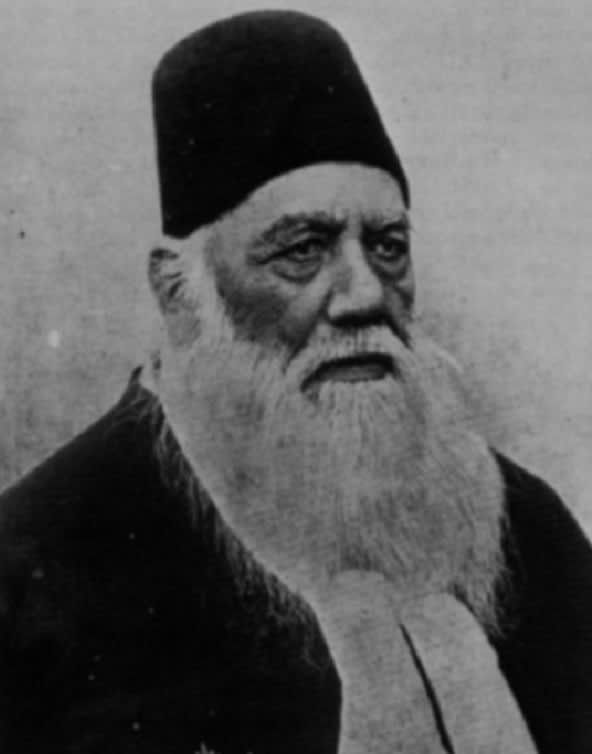
(a) Identify and name the personality.
(b) Name one famous educational institution founded by him.
(c) Describe two of his ideas or views.