
Geography
River Rafting is journeying on a torrential river on an inflatable rubber boat. Rivers originating at high altitudes have torrential flow near their source.
Which of the following places would be suitable for river rafting?
- Gomti in Lucknow
- Hughli in Kolkata
- Ganga in Rishikesh
- Sabarmati in Ahmedabad
Water Resources
4 Likes
Answer
Ganga in Rishikesh
Reason — Rishikesh is located in the foothills of the Himalayas where the Ganga River flows with a strong, torrential current, making it ideal for river rafting.
Answered By
1 Like
Related Questions
Read the two statements given below and select the correct option.
S1: The state of Maharashtra is emerging as the largest sugar-producing state in India.
S2: The black soil of Maharashtra is more fertile and well-drained.
- S1 is true but S2 is false.
- S2 is true but S1 is false.
- S2 is a contributing factor to S1.
- S1 and S2 are independent of each other.
Every year, the Ganges and the Brahmaputra bring millions of tons of silt into the plains of Bangladesh. They carve new courses every year. As a result, islands are created which last until they are washed away by fresh floods. These islands are locally known as chars.
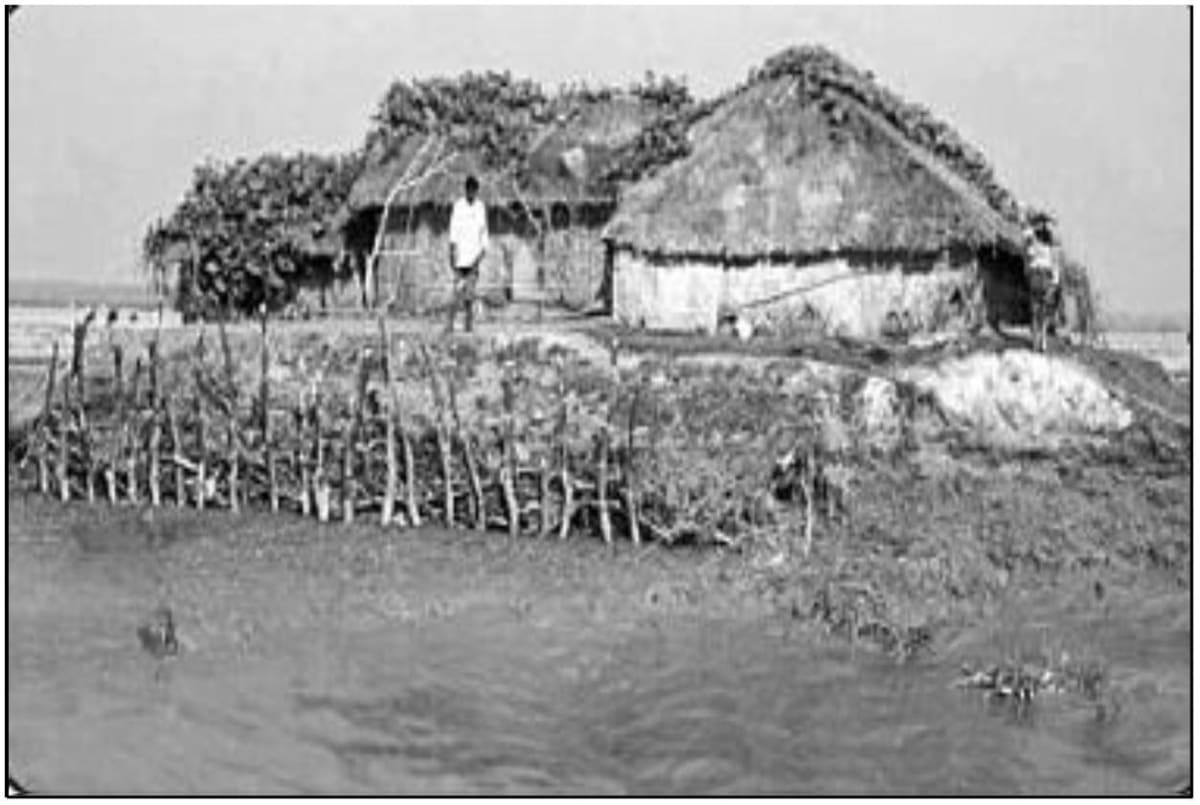
Which of the following is the primary benefit provided by the chars for the local community?
- rocky plains for smooth mobility.
- fertile soil for subsistence farming.
- the protection from man-eating tigers of nearby Sundarbans.
- deposition of mineral resources from the Himalayas, such as precious stones.
In certain parts of India, glaciers are the main source of water. The people in these areas use an innovative water harvesting technique by diverting glacier streams into small tanks. It is usually done in the evening when the glaciers are relatively melted. Which of these regions could be practising this?
- Khasi and Jantia hills
- Ladakh region
- Siwaliks hills
- Tarai region
See the picture alongside, which depicts an environmental disaster. Identify it.
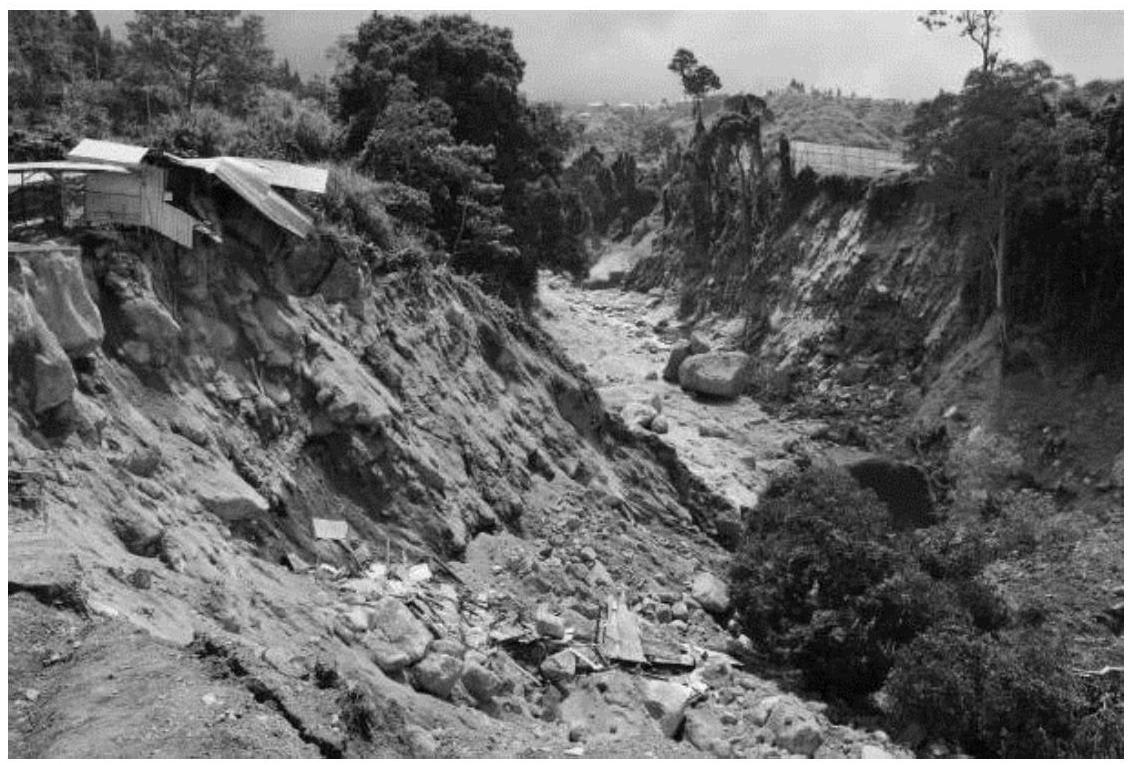
(Source: www.istockphoto.com )
- Soil erosion through landslides.
- Soil erosion through an earthquake.
- Soil erosion through perennial droughts.
- Soil erosion through shifting cultivation.