
History & Civics
With reference to the picture given below answer the following questions:
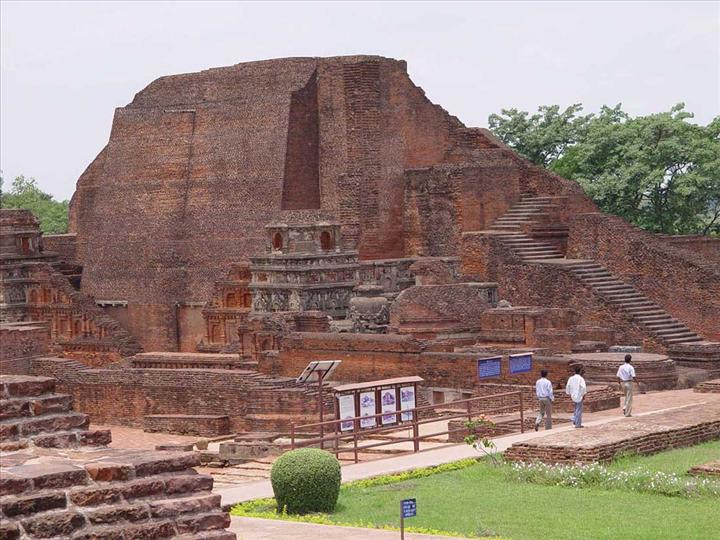
(a) Identify the monument shown in the image and describe its historical significance during the Gupta period.
(b) Name some of the foreign countries from which students came to study at Nalanda.
(c) What were the names of the three great libraries? Discuss the importance of these libraries in preserving and advancing knowledge during the Gupta period.
Gupta Age
1 Like
Answer
(a) The monument shown is the Iron Pillar at Mehrauli, which demonstrates the metallurgical skill of Gupta artisans. Despite being exposed to sun, rain, and storms for centuries, it has not rusted. The pillar bears an inscription of Chandra, identified as Chandragupta Vikramaditya, and is believed to have been erected by Kumargupta I to commemorate the achievements of his father. It holds special historical significance from the Gupta period.
(b) The foreign students who came to study at Nalanda included individuals from China, Korea, Japan, Tibet, Sri Lanka, and Southeast Asia.
(c) The three great libraries were called Ratnasagar, Ratnadadhi and Ratnaranjak.
- Preserving Knowledge: These libraries housed important manuscripts on Buddhism, philosophy, medicine, and astronomy, preserving ancient wisdom for future generations.
- Intellectual Exchange: Nalanda attracted scholars from across Asia, fostering a global exchange of ideas and knowledge.
- Advancing Learning: The libraries supported research and debate, contributing to the growth of knowledge in various fields.
- Cultural Influence: They played a key role in spreading Indian intellectual traditions to other parts of Asia.
Answered By
1 Like
Related Questions
Fa-Hien documented the social and economic conditions of India during the Gupta period. With reference to this, answer the following questions:
(a) Why is Fa-Hien's account considered a valuable source for understanding the Gupta period?
(b) How did his accounts highlight the religious and cultural tolerance of the time?
(c) What role did such foreign accounts play in reconstructing Indian history?
Read the lines given below and answer the question that follows:
"With fertile lands in eastern Uttar Pradesh and Bihar and abundant iron ore in Central India, the Gupta Empire thrived economically, fostering remarkable advancements in literature, art, architecture, science, and culture."
(a) Explain how the geographical advantages contributed to the economic prosperity of the Gupta Empire.
(b) Discuss the cultural and intellectual achievements during the Gupta period, highlighting why it is called the "golden age" of Indian history.
(c) How did the stable administration of the Gupta rulers influence trade and commerce?
Read the following excerpt and answer the questions that follows:
"A lengthy eulogy to Samudragupta (who ruled until c. 375) was inscribed on an Asokan pillar at Allahabad that provides detailed information about his military achievements and lists the names of the states and people conquered by him."
(Source: https://zh.unesco.org/si/kroad/sites/default/fi/es/know/edgebankarticle/vollll%20si/k%20roadthe%20gupta%20kingdom.pdf)
(a) Who was Harisena, and what does his work reveal about Samudragupta's conquests?
(b) Why is this inscription considered a critical source for understanding the Gupta Empire?
(c) Compare the importance of inscriptions with other sources, such as coins and foreign accounts, for studying ancient history.
The Guptas achieved remarkable advancements in art and culture. With reference to this, answer the following questions:
(a) What are the main characteristics of Gupta sculpture?
(b) How do the Ajanta paintings reflect the artistic excellence of the Gupta period?
(c) Compare the Bagh and Ajanta paintings in terms of style and themes.